Mapia, from problem
to product in 6 weeks .
Project summary
From problem to product in six weeks. A real MVP built to close the Product Management Program at Instituto Tramontana.
A problem someone lived every day.
To conclude the Product Management Program taught by Íñigo Medina at Instituto Tramontana, we had to build a digital product in six weeks. Together with Paula Carrasco (Mercado Libre) and Asier García (Chubbyapps), we decided to solve a problem that Asier lived every day: personalizing dozens of press emails manually. Asier knew that personalization worked — it improved his response rates — but it wasn't scalable.
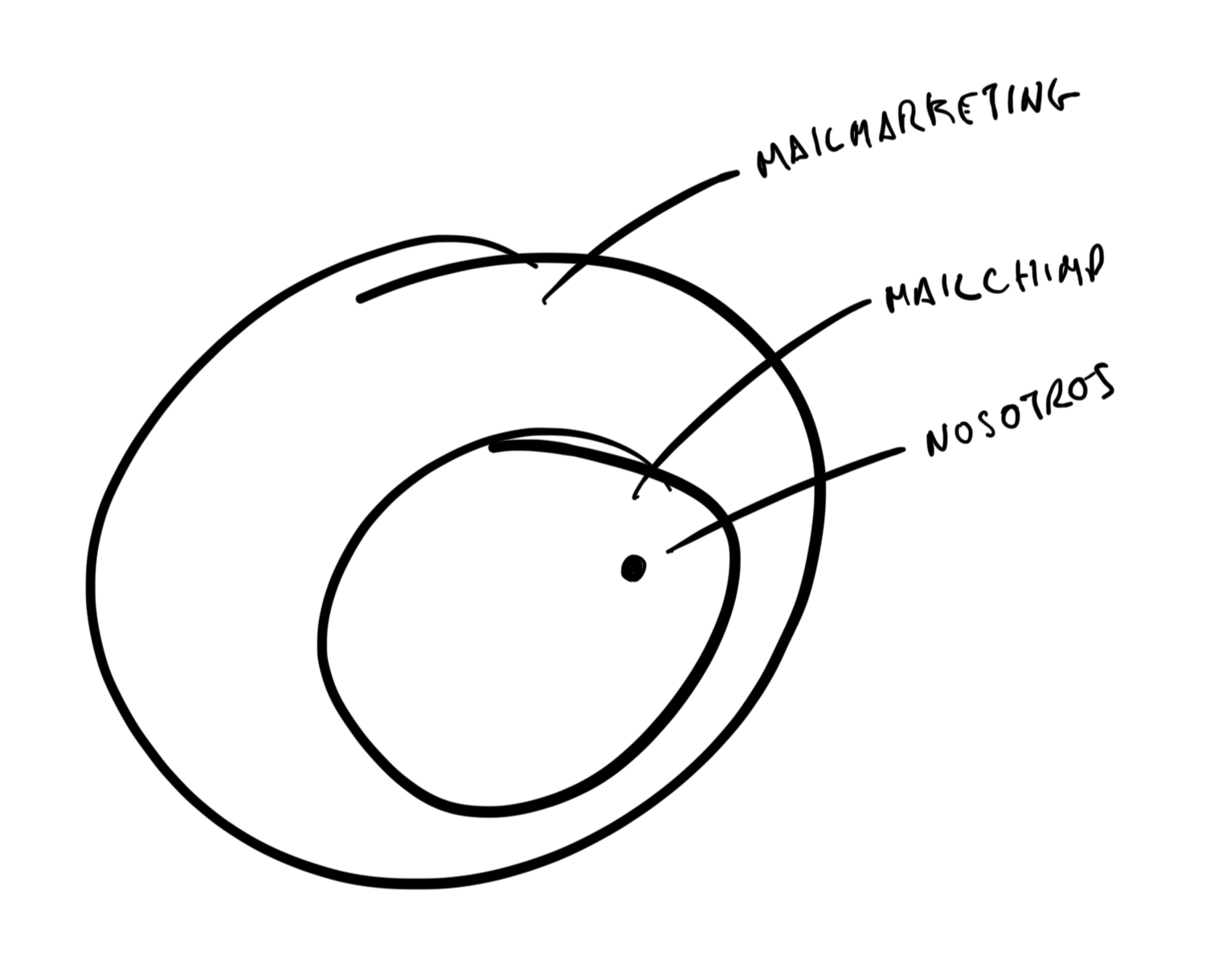
Email marketing tools (Mailchimp, etc.) only insert basic tags — name, company — that are obvious and ineffective. Nobody wants to feel like just another number on a distribution list. The challenge was to automate deep personalization without losing authenticity.
Six weeks, six steps.
Week 1 · Definition. Initial prototype in Lovable. Concept validation without investing too much effort. Lovable generated more features than we requested, which forced us to be more explicit about what we did NOT want to build.
Week 2 · User research. Conversations with potential users. Alfredo Lores was already doing similar processes manually and needed CRM integration: his concern was “that it doesn't look like a robot”. Emma González sent notes without personalization due to lack of time, adjusting tone was enough for her: her fear, “I'm terrified to delegate something so personal to AI”.
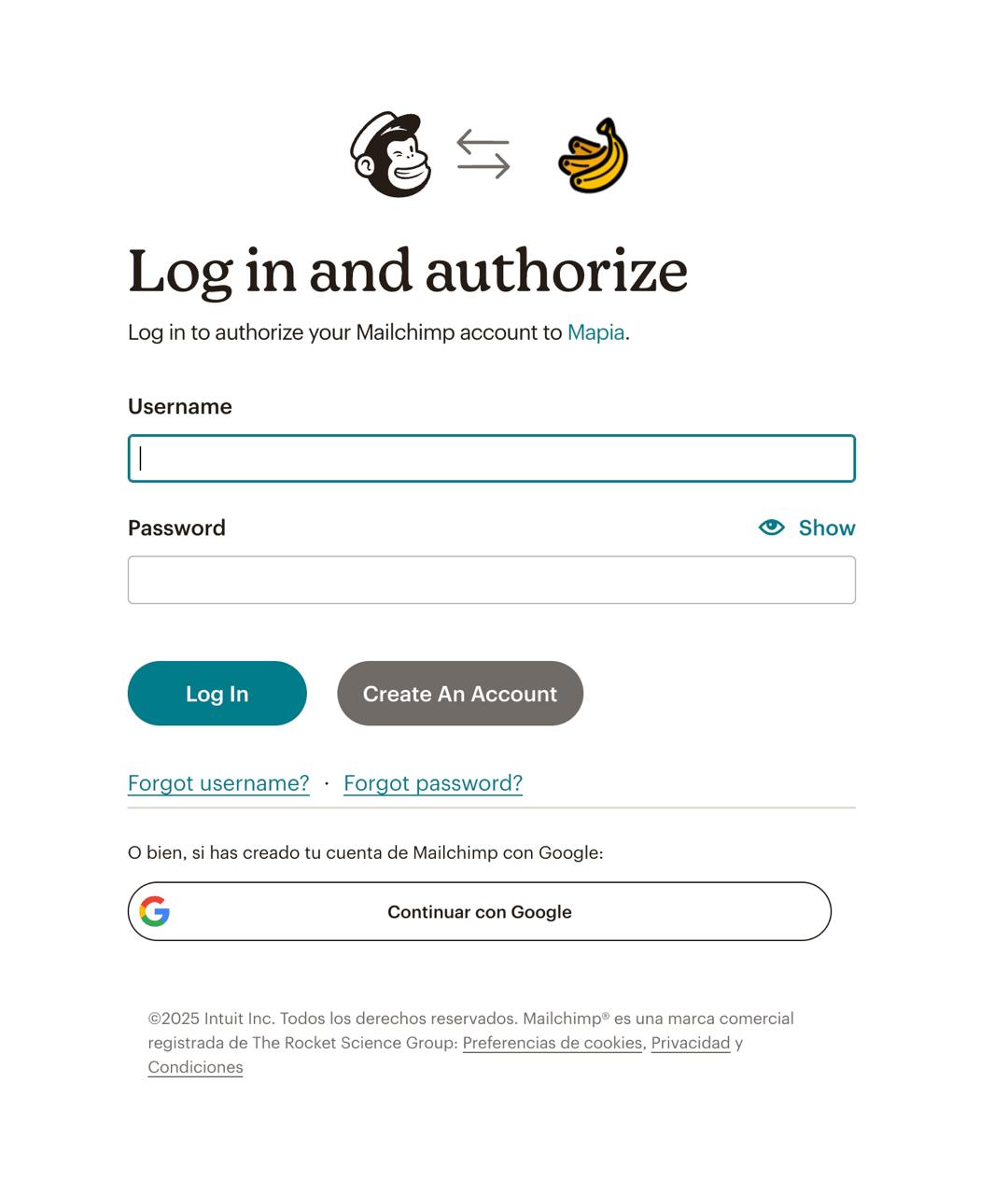
Week 3 · Strategic pivot. Technical problems with Gmail OAuth forced us to pivot to Mailchimp. It turned out to be a better decision: ~70% market share, users with audiences already created, more validatable product, publishable on their marketplace.
Week 4 · Technical blocks. Mandrill's API wasn't working. Days debugging. Perplexity gave me the answer: it required a paid account, poorly documented by Mailchimp. I bought a domain (mapia.tech), configured DNS (SPF, DKIM), migrated to Resend.
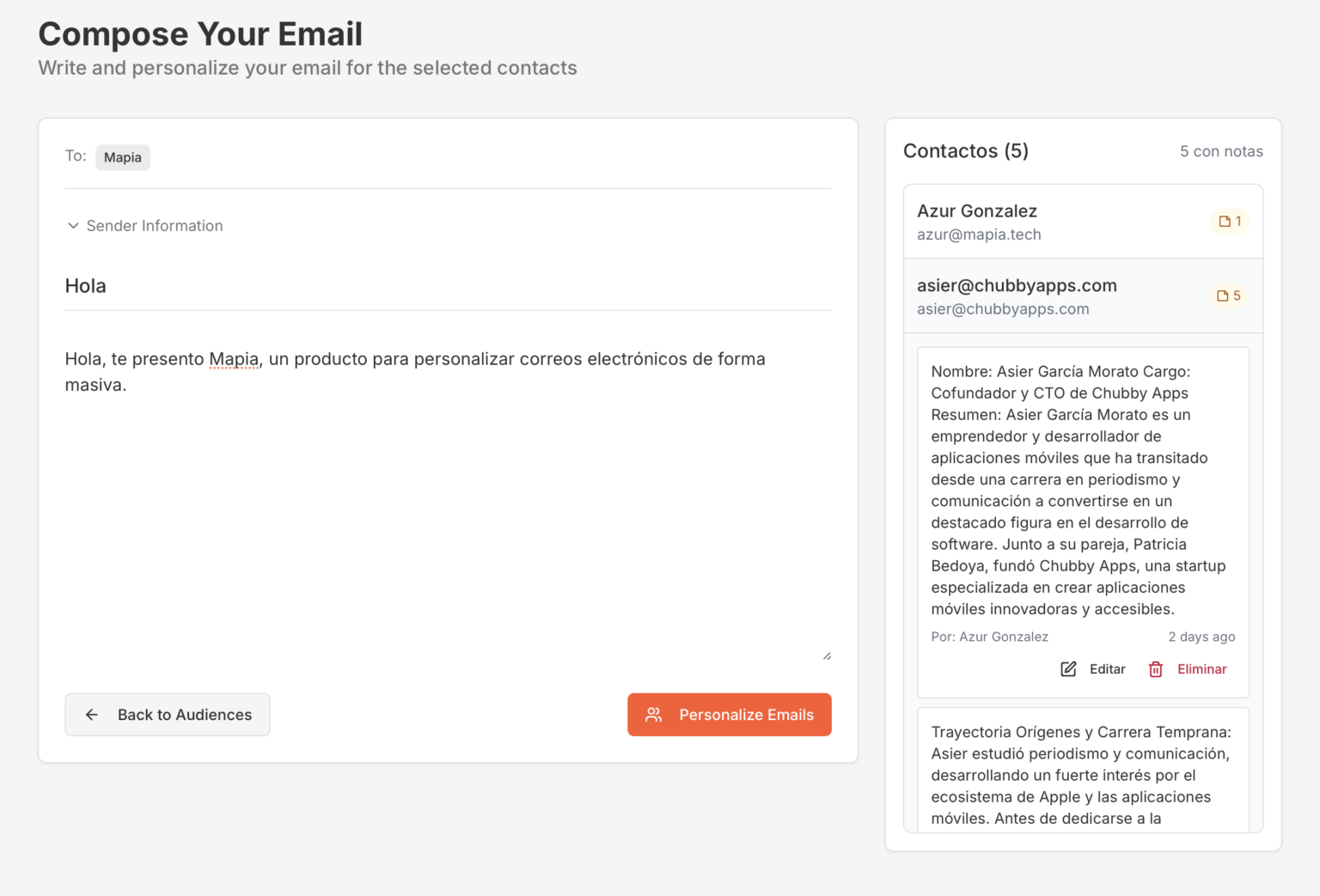
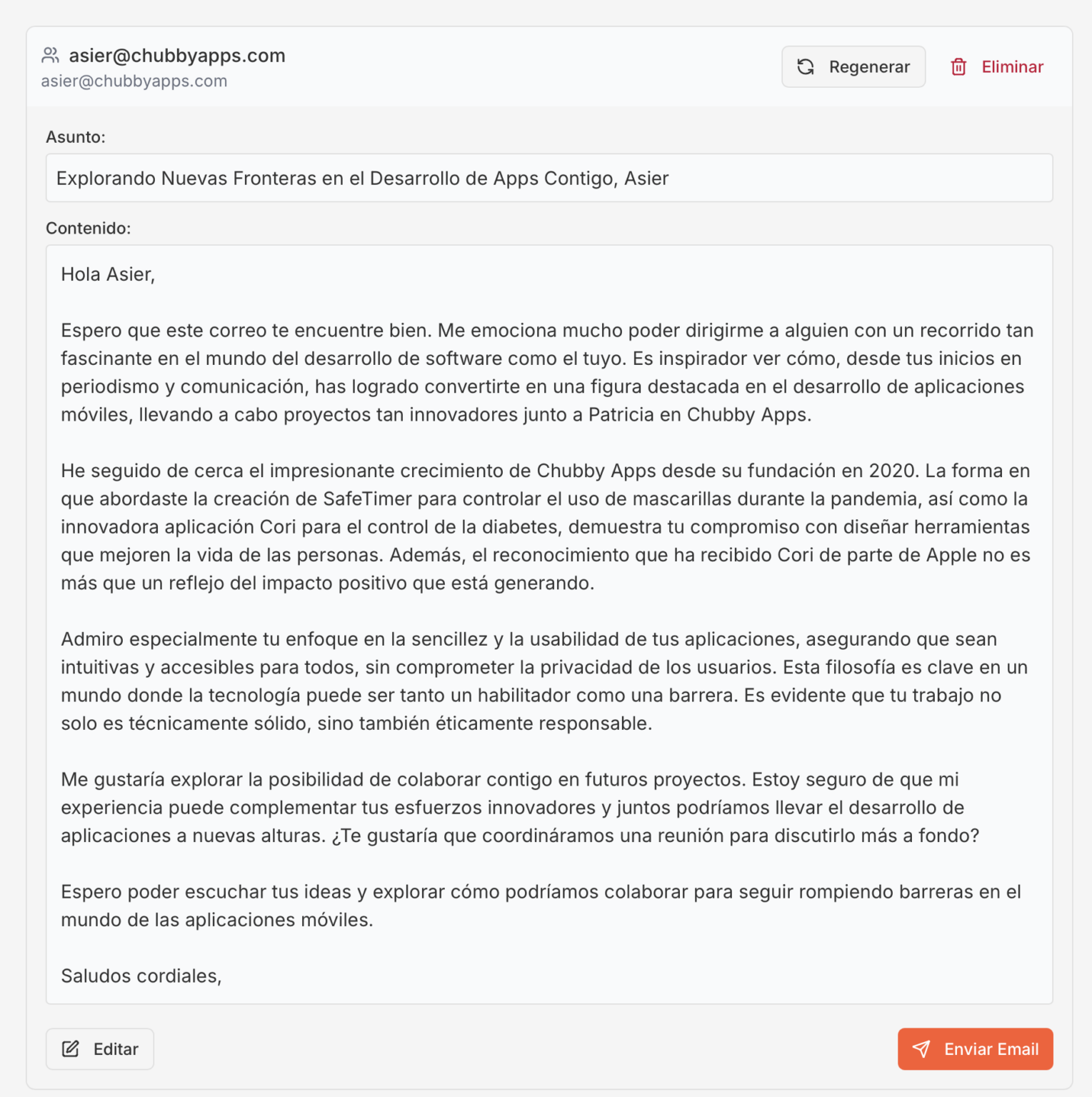
Week 5 · Execution. Resend migration completed, Mailchimp connection, audience selection, basic personalization, functional mass sending. I added an integrated contact notes manager (simpler than Mailchimp's native interface) to generate adherence.
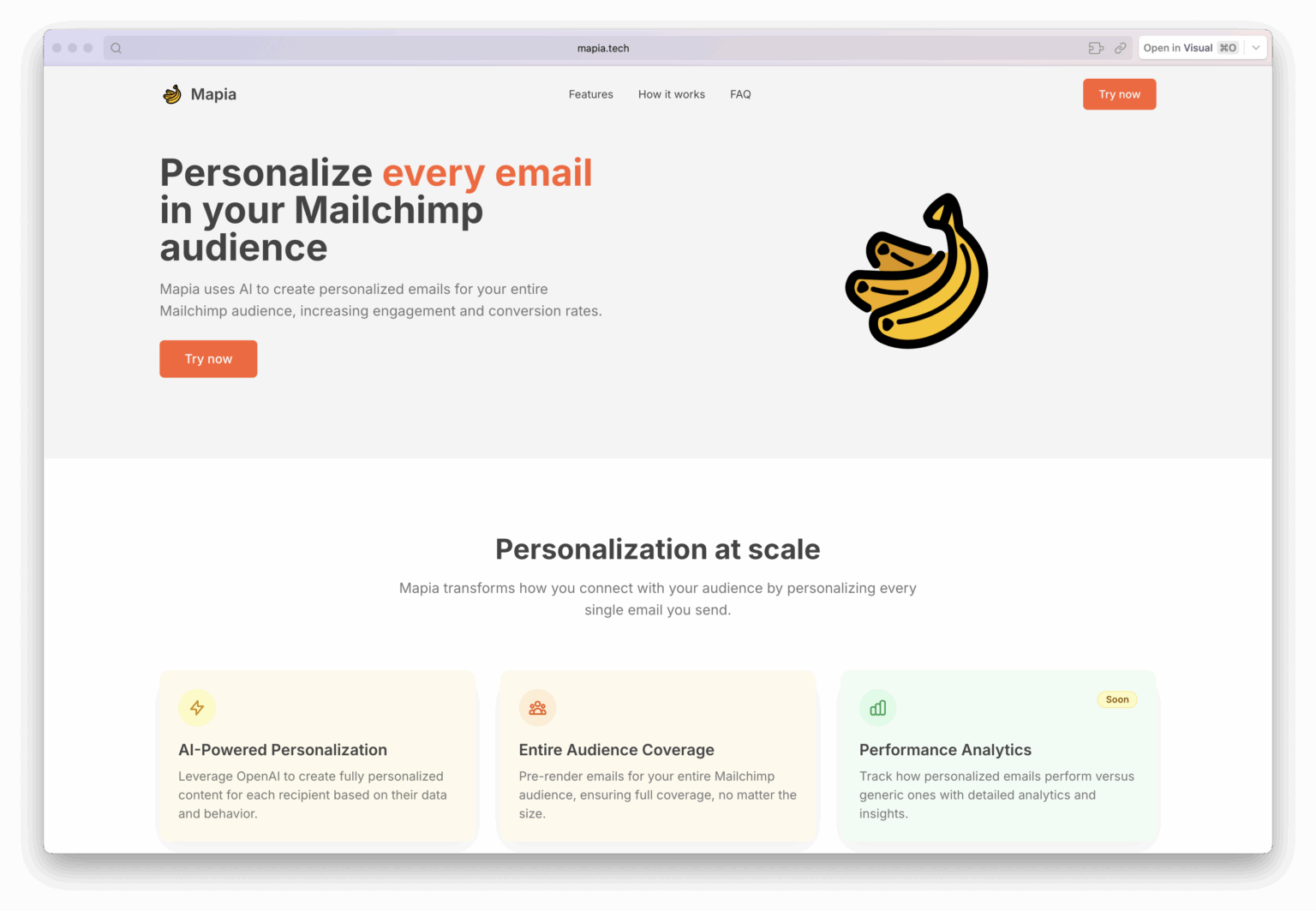
Week 6 · Polish. Landing page and branding: I added bananas as a kind of logo, giving the product personality while making a direct nod to Mailchimp's monkey.
I'm terrified to delegate something so personal to AI.
Decisions.
-
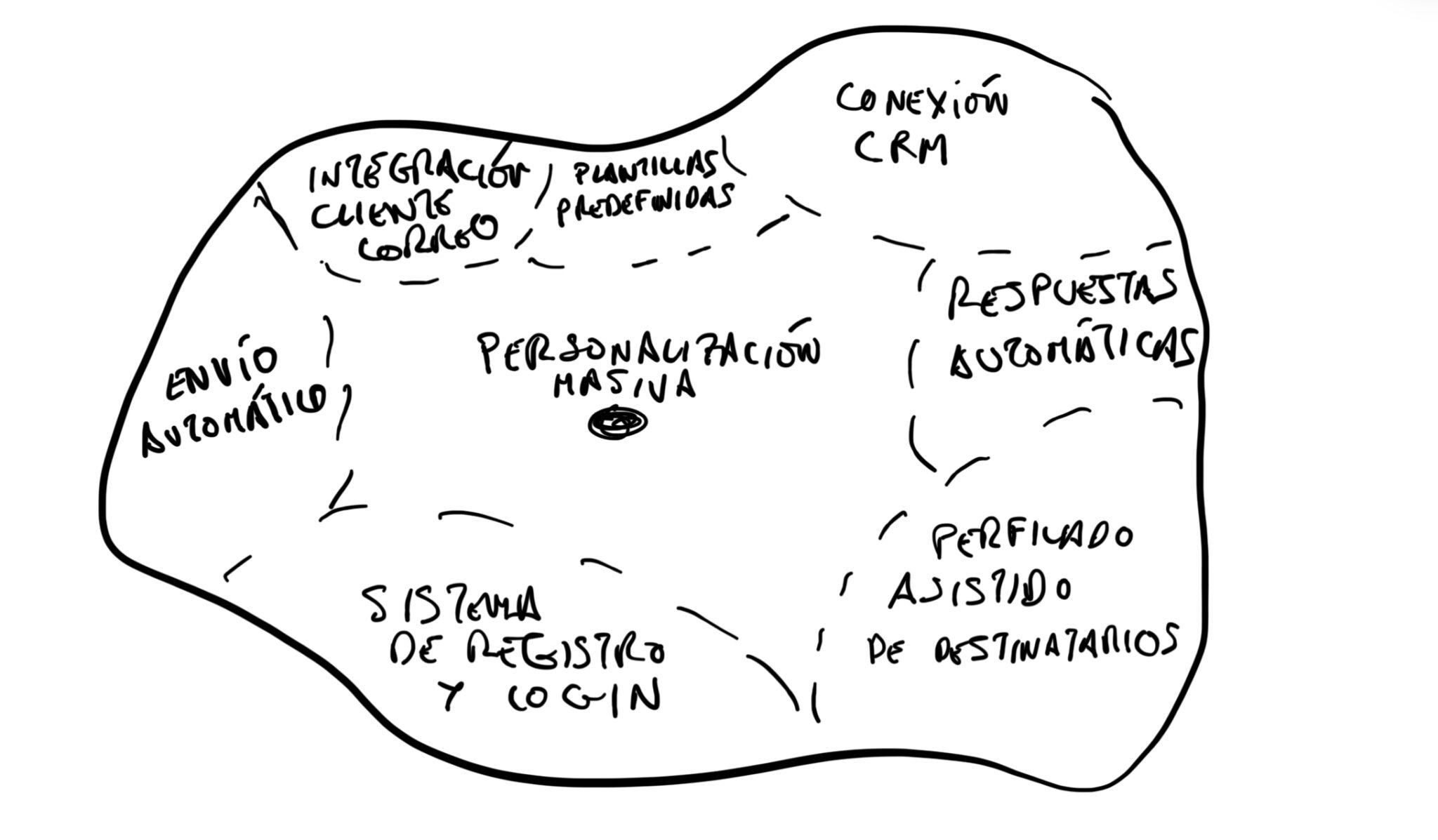
Scope closed to mass personalization.
CRM, sending, analytics were deliberately left out of the MVP. Without clear limits, the product becomes an amalgam of features. In six weeks you can't build everything, and saying no is part of design as much as saying yes.
-
Pivoting to Mailchimp.
Problems with Gmail OAuth forced us to change integrations. We accepted the pivot for what it was — an adjustment with new information, not a failure. Mailchimp turned out to be a better decision: ~70% market share, users with audiences already created, more validatable product, publishable on their marketplace.
-
Notes as a source of personalization.
The research revealed that personal data is in people's heads, not in structured databases. We designed an integrated contact notes manager: each note feeds the personalization of emails to that person. The system resembles how contacts work in the head of someone who does PR, not how databases work.
-
Vibe coding as a method.
Technical blocks made me passionate about vibe coding: building software by conversing with AI through prompts. The rule I learned is: don't speculate, copy errors directly into prompts, build in parts, validate before integrating, and do rollback without fear when something doesn't fit.
-
Bananas as a brand.
In the polish of the last week I added bananas as a kind of logo. It gave the product personality while making a direct nod to Mailchimp's monkey. A small decision, made at the end, that carried the entire visual tone of the MVP.
What remained.
At the program's close we delivered a functional MVP with Mailchimp, OpenAI and Resend integrated, with positive feedback from multiple profiles: PR, marketing, sales. We identified risks honestly — limited adherence, dependence on Lovable as a black box, niche market, no moat, psychological barrier with AI — because an MVP that doesn't face itself honestly is useless.
More important than the product was the method. Mapia demonstrated that functional software can be built in weeks with modern tools, and that the best products are born from real personal frustrations. For me, personally, the process changed something: I went from conceptualizing products and coordinating developers to prototyping directly by conversing with AI. Learning to think in code has become part of the craft.