Vidiv Events,
from zero to product .
Project summary
From zero to product during the pandemic.
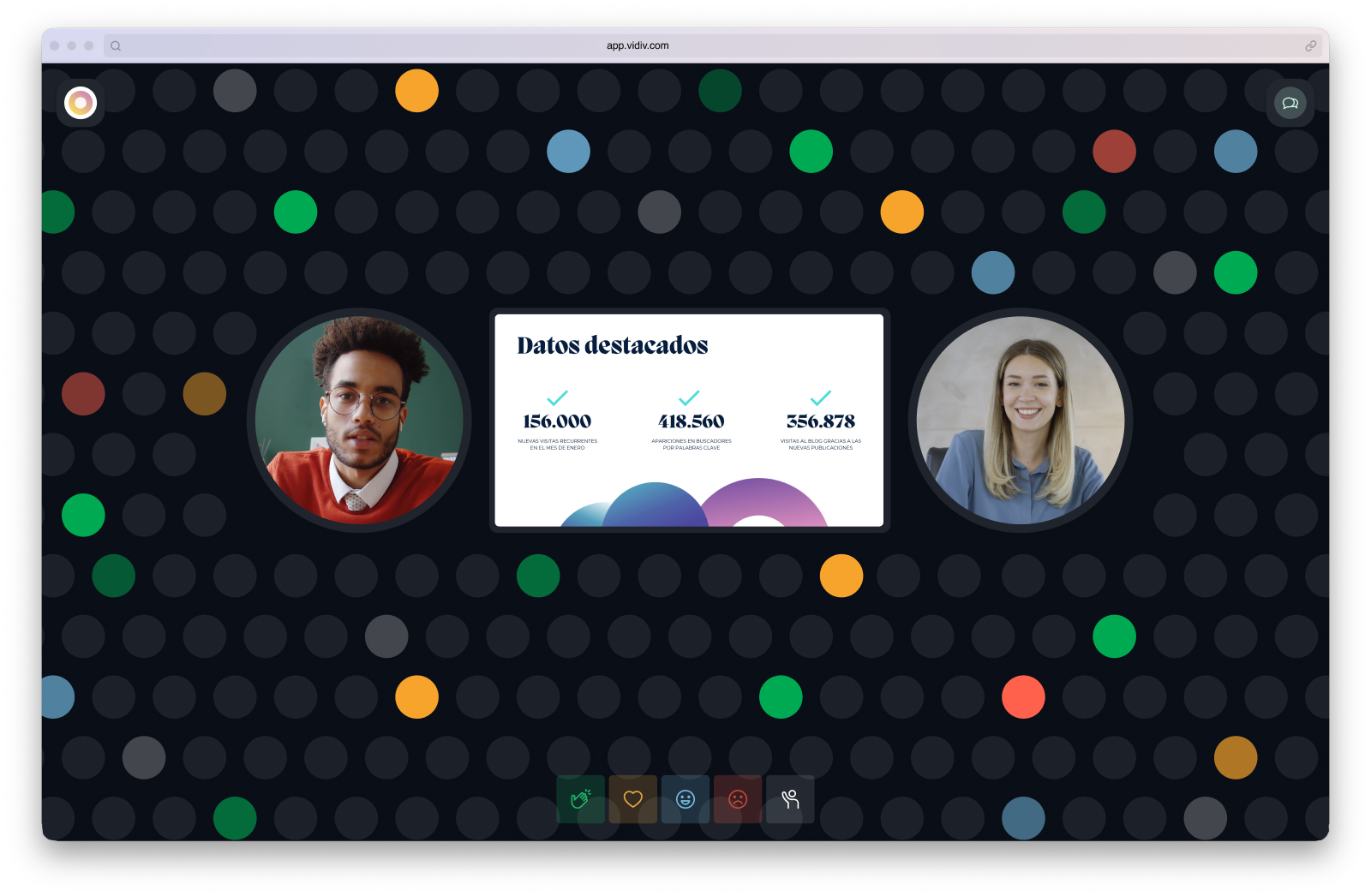
Connected people, without presence.
Vidiv Events was born in 2020 to solve a specific problem: massive online events were cold, unidirectional, and dehumanizing. Hundreds of people connected but without real presence.
It was 2020. The pandemic had pushed all conferences, classes, and meetings to the screen, and the screen had flattened them. The problem wasn't technical — the infrastructure existed — but human: people were there but they weren't.
Making the invisible visible.
The proposal was radical in its simplicity: represent each attendee as a circle in a shared space. An emotion pad allowed real-time reactions, and the circles changed color according to the group's emotions, making visible something that was invisible in traditional webinars: the emotional state of the room.
We iterated on the product by adding features that deepened this humanization: turn request to involve attendees, chat, sending contextual links during conversation.

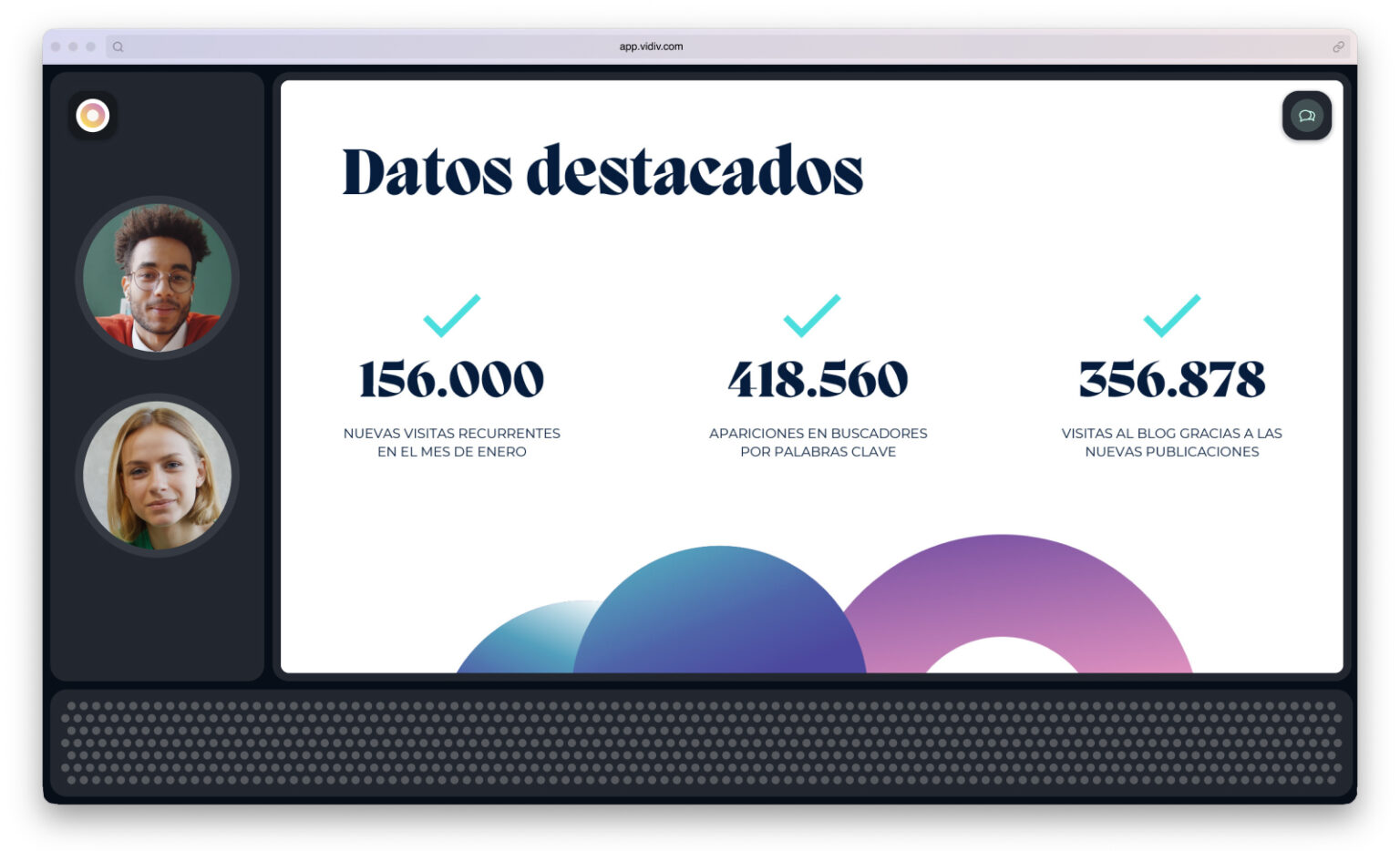
Over time we identified that the most solid use case was training. This led us to redesign the space to dynamically adapt to the group size.
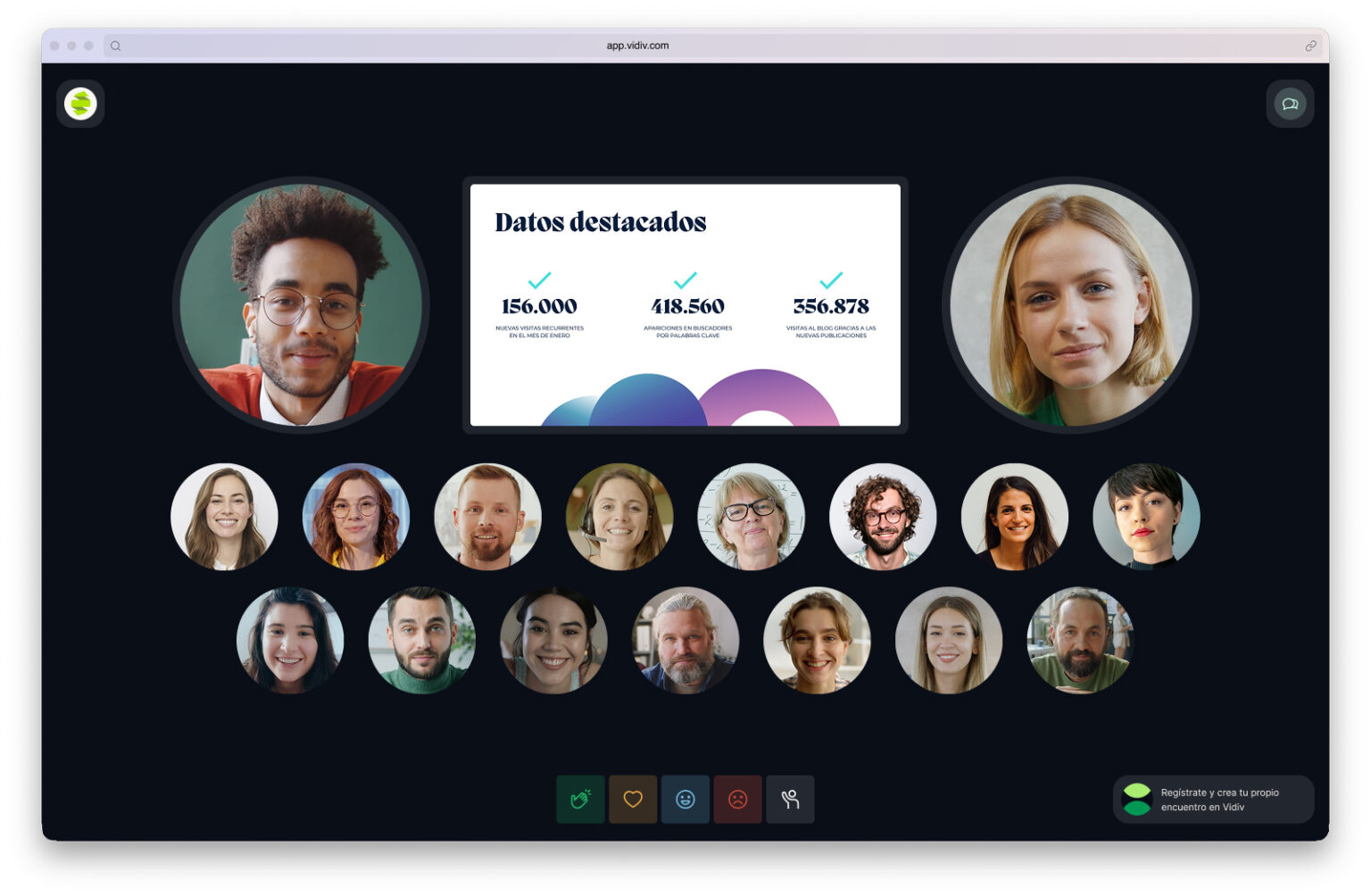
Making visible something that was invisible in traditional webinars: the emotional state of the room.
Decisions.
-
One circle per attendee.
Each connected person as a circle in the same shared space. Presence reduced to its minimal unit: enough to know someone was there, without taking up the screen when there were hundreds.
-
A shared emotion pad.
A control to react in real time. The circles changed color according to the group's emotions, making visible something that was invisible in traditional webinars: the emotional state of the room.
-
Turn request, chat and links.
Iterations that deepened humanization. Turn request to involve attendees, open chat, sending contextual links during conversation.
-
The real use case was training.
Over time we identified that the most solid use case was training. The product found its best version there: smaller groups, more consistent, with reason to be present.
-
A space that adapts to the group.
We redesigned the space to scale dynamically. In intimate events we showed the face or video of attendees, increasing closeness. In massive events, the space prioritized content over individual presence.
What remained.
Vidiv Events served its function: finding a real use case, training the team in product design under pressure, and leaving a technical foundation — WebRTC infrastructure, low latency, room orchestration — that would later be needed for something else.
Without Vidiv Events there would be no Vidiv Agents. When the product didn't find product-market fit, the team didn't start from scratch: it started with infrastructure, with a method, and with a concrete lesson about where the humanization of a screen lies.